
 Login / Register


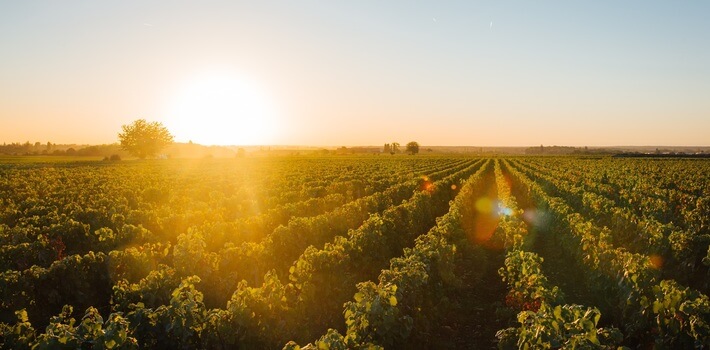
Burgundy is both a region, a wine and, some would argue, a style.
The region of Burgundy covers a wide area, starting in Auxerre just south of Paris (Chablis region) and running in ribbon like streaks and blobs southwards through The Cote de Nuits and Cote de Beaune (the Cote d’or), Cote Chalonnaise, Cote Maconnais and finishing at the southern tip of Beaujolais just north of Lyon (where the Rhone region starts) – almost 300 miles in total. Within these 300 miles lie some of France’s, and arguably, the World’s greatest wines.
The Grapes
This is the easy part – the principle red grapes are Pinot Noir and Gamay; Pinot Noir being the principle red grape used for the most well known red wines such as Nuits St George, Gevrey Chambertin, Volnay, Pommard etc, with a flavour that is all red and black fruits, lightish colour and tertiary flavours that are often called ‘farmyardy’!
The red Gamay grape is used predominantly in Beaujolais, with a little grown in the main appellations of the Cote d’Or where it is blended to make a rarely seen red wines called Bourgogne Passetoutgrains. Gamay makes dark purple coloured red wines with a distinctly cherry and black pepper flavour
Other, much lesser known red grapes are Cesar (sometimes seen in Auxerre) and Tressot.
White grapes are again easy to understand. The principle white grape is Chardonnay, with a little Aligoté and Sauvignon Blanc. This latter white grape is only allowed in Auxerre where it makes a rarely seen Sauvignon de St Bris. Again there are some pockets of other white grape such as Pinot Blanc and Pinot Gris (called Pinot Beurot). Chardonnay is the grape that makes white wines such as Puligny Montrachet, Chablis, Pouilly Fuissé and has a distinct affinity with oak, with a flavours of buttered apple, peach and citrus.
The Climate
The principle factor that affects all grapes is climate; more heat and sun = more sugar = more weight, alcohol and less acidity, whilst cooler regions have higher acidity and are generally fresher and lighter in alcohol. Burgundy is situated in a cool continental climatic zone, shielded from coastal influences which affect wine regions such as the Loire, Bordeaux, and Mediterranean coastal regions. Continental climate regions have cold winters and warm sunny summers. This means that traditionally the grapes ripen well and yet retain acidity – however (and this is the Big however), with such a wide geographic spread, the climate differential in Burgundy is a major factor on the resulting wine style. Auxerre (Chablis) in the cooler north can suffer from severe frosts and in years past the Chardonnay grapes have struggled to ripen fully, whereas in the southern, warmer regions of Maconnais and Chalonnaise, the Chardonnay grapes will have less acidity, more sugar and more ‘weight’.
Red grapes are similarly affected which is why Pinot Noir (which needs more warmth and sunshine than white grapes) makes a lighter, fresher and less fruity red wine in the north, whereas in the warmer region of the Cote d’or and beyond Pinot Noir ripens well, and has deeper colour, more fruit, weight and alcohol.
As a wine region Burgundy can suffer from frost in the spring, affecting every sub-region; poor flowering in April and May caused by rain and wind, and in the crucial summer months when the grapes are beginning to fill out and ripen, periods of rain and then warmth can cause diseases in the vineyard such as Mildew (rot). In recent years added climatic changes have brought the increased risk of severe heat spikes which cause the vines to halt the growth cycle and retards grape ripening resulting in smaller harvests due to hydric stress.
The Terroir and the Concept of Climats
Burgundy is the spiritual home of the "terroir" concept. The term terroir is often thought to just mean soil and climate, but in reality it defines a ‘sense of place’, involving many added facets, such as ecology, aspect, culture and natural synergy.
- The Soil: The region features an ancient mosaic of limestone and clay soils formed during the Jurassic period. For example, the famous Kimmeridgian soils in Chablis give those white wines their laser like acidity and flinty minerality, whilst the clay and marl soils on free draining limestone rock in the Cote d’Or give richer, more weighty reds and whites.
- Aspect: Each plot of land sits in a defined place, with the ground sloping upwards towards low ridge of fragmented and forested hills. The slopes are variable, with village wines at the bottom of the slopes where the soil is thickest, premier crus generally mid-slope, and the best wines generally come from the vineyards at the top, where thinner soils mean the vines must strike through rock to find moisture, and nutrients are lower, forcing the vine to struggle.
- The Climats: Burgundy is famously divided into thousands of individually named plots of land called climats. Each climat has its own subtly distinct microclimate, soil composition, aspect and history, which directly influences the taste of the wine—even if the vineyards are separated by just a few meters. Added to this infinite variation is the human element. You give 1,000 winemakers a plot of land and an idea of what great wine is, and you will end up with infinite variations on a theme!
Burgundy Classifications
This is the ‘legal’ and geographical element that sometimes is confusing for those who wish to understand Burgundy, but in reality it is a simple hierarchical classification in line with the whole of Europe in terms of classifying wine from largest geographical area to smallest – in basic terms imagine it as a pyramid.
Burgundy’s legal classification is based strictly on the specific parcel of land (the climat) rather than the producer. As you move up this ‘pyramid‘, the wines generally become more complex, age-worthy, and expensive.
- Regional (Bourgogne AOC): The base of the pyramid. These wines account for over half of Burgundy's production and offer fresh, approachable, and fruit forward expressions.
- Village Wines: Wines from specific villages (e.g., Chablis, Gevrey-Chambertin, Volnay). They offer more character and typically display the classic traits associated with that specific village and soil.
- Premier Cru: Specific, highly regarded vineyards within a village. They offer greater depth and complexity than village level wines. The label will list the village name followed by the vineyard name (e.g., Volnay 1er cru Fremiets).
- Grand Cru: The pinnacle of Burgundy, representing the absolute best 1-2% of vineyards. There are 33 Grand Crus in Burgundy. The label usually only displays the vineyard name (e.g., Le Montrachet or Chambertin)
The Human element
This is where the mystery sometimes lies for those wishing to really understand Burgundy. Why can you taste 10 different red wines, all labelled Gevrey Chambertin, all made from Pinot Noir, and all grown on the sloping clay and marl soils around the village of Gevrey and yet they all taste different. This is where Terroir and the human element combine.
My favourite analogy is car drivers. We all think we’re good drivers, but in reality, as other drivers, not to mention the Police, speed cameras and TV dashcam programmes will tell you, not all drivers are the same! Whilst I would like to be thought of as the next Lewis Hamilton, as a driver Lewis refined, practiced and understood what it takes to drive a car in a way that very few can comprehend. Winemakers are the same. There are those who make good wine, those who make bad wine, and those who make wines which can stop conversation. The difference is in the way in which a winemaker understands every process, every nuance, every defining element that can be expressed and wrung from the grape, soil and climate and vintage in a way that seeks perfection.
I will drink to that!
 Back to blog