
 Login / Register


Every year the House of Townend Wine Buying Team go on a 4 day marathon of tasting through the whole of the Bordeaux Appellation to assess and analyse the new vintage - sniffing, tasting, spitting and writing copious notes on over 300 wines so that we can make informed decisions on what to purchase for our many customers. Each year we spend as much time as possible meeting the winemakers, attending group tastings and tasting – and each year we try and come up with a phrase or sentence that perfectly encapsulates the vintage; sometimes the phrase comes on the first few wines of day one, sometimes the second day, but this year it was on the 3rd day, as we drove up from Macau toward Pauillac – my lightbulb moment, as I describe it.
Small, but Perfectly Formed.
Let me explain…
Leaving Luton on a cool 12°C Sunday morning, thence to arrive in a very warm and gloriously sunny 25°C seemed to kickstart the En Primeur week off perfectly. Driving into Bordeaux from the airport John and I discussed the data and analysis that we had prepared from vintage reports already released (my many thanks to Gavin Quinney of Chateau Bauduc for his, as ever, wonderful summary of weather and vintage data). The data all seemed to suggest this was a small and very warm vintage, the smallest since 1991 in fact, and the warmest June and July since 2005. With vineyard temperatures reported at 35-40°C for several days at a time throughout both crucial ripening months, would the acidity be overcome by over ripeness and alcohol? Time would tell.
Monday 20th
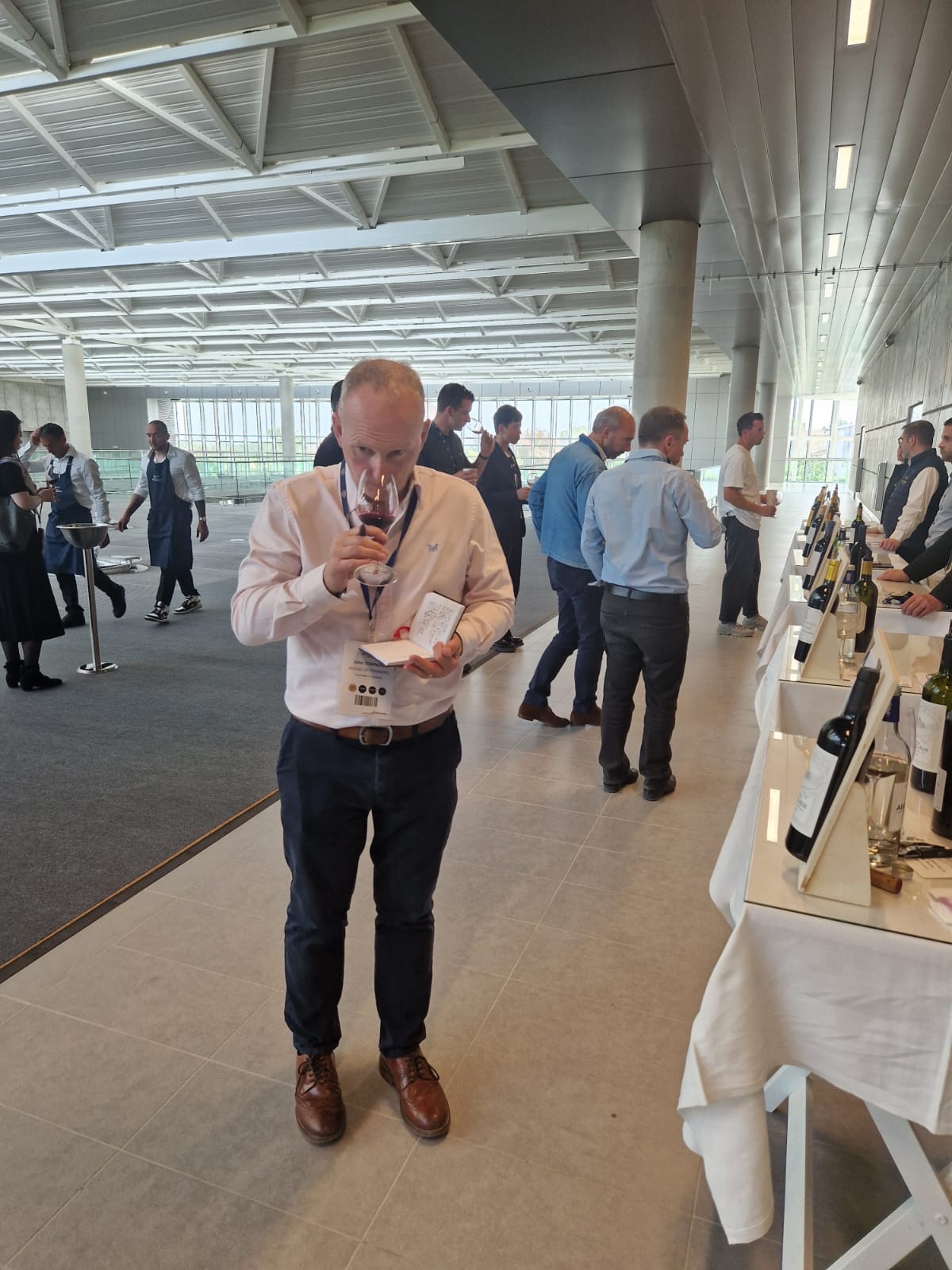
Monday saw us at the important Hangar 14 tasting on the opening morning of the UGC (Union de Grand Cru) to taste the 2025 Bordeaux wines. Situated on the river in Bordeaux city, this is a wonderful opportunity to taste, albeit in a pressurised 3 hours, over 140 wines from most major Chateaux. Above all, it allows you to compare chateau against chateau, terroir against terroir and, importantly, appellation against appellation. After 3 hours of solid tasting, whilst you may have writers cramp, blackened teeth and sore gums, you do feel you have gained a valuable first insight to the vintage.
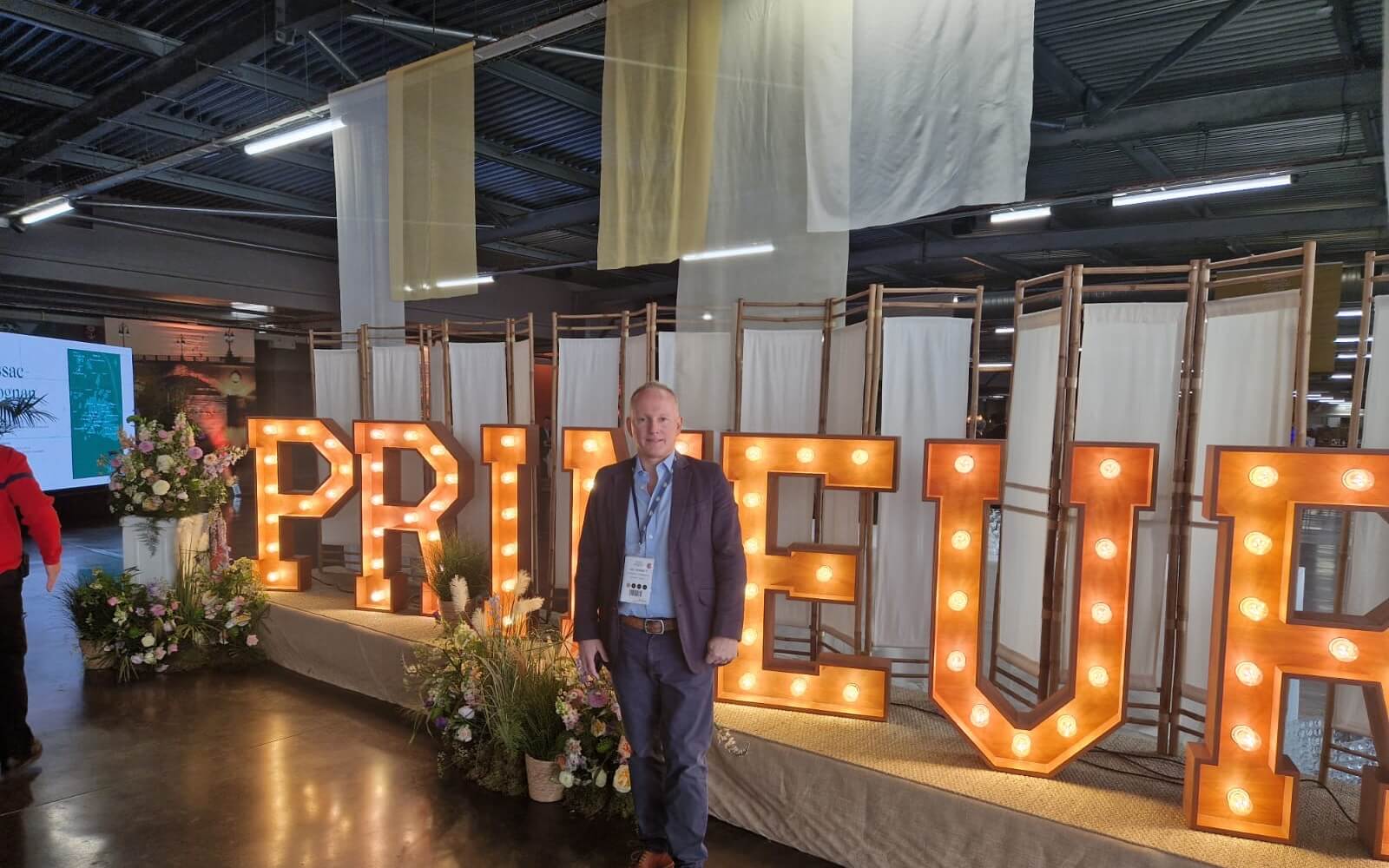
As a tasting, it pays to arrive at the venue early, the hall is still cool and the winemakers are readily on hand to discuss their wine.
Overall, our impression from this first tasting was that the 2025 vintage was very good; all the wines we tasted were lower in alcohol than previous hot years such as 2022 and 2005: Crucially, however, compared to 2022 and 2005, the fruit character was of very concentrated red fruits rather than jammy black fruits, with freshness very much a notable factor of the 2025’s when we compared our notes. The smallness of the berries and thicker skins, a result of the heatwaves during June and July, gave rise to a small harvest, with very concentrated juice, which then needed little coaxing from pumping over or added extraction. Light winemaking was the keyword in 2025. Most importantly, low yields were reported by almost all Chateaux – ranging from 20% to as much as 50% lower than their normal production. With previous vintage 2024 similarly reduced, and production costs rising, the question of final pricing was on everyone’s lips.
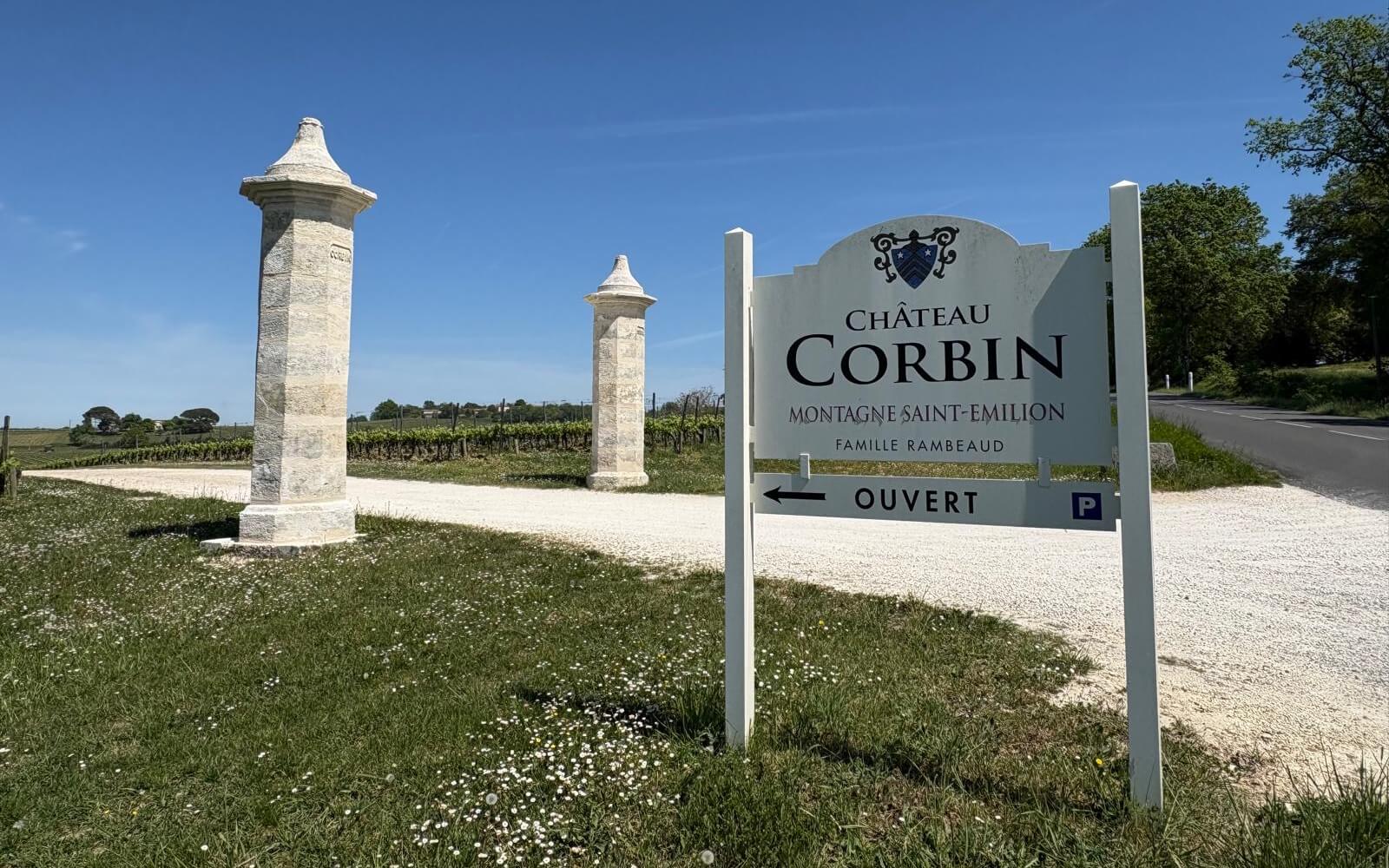
From Bordeaux City, we then drove into the Libournais, to meet with our old friend and wonderful winemaker, Jacques Rambeaud of Chateau Corbin in Montagne de St Emilion. This wonderfully pretty Chateau lies on a gravel and clay hill looking southwards towards the spire of Pomerol. We tasted all 5 of Jacques wines in the shade of the old wine press, by the edge of the vineyard, and, as ever discussed wine, football, economics and families - the norm for 2 long standing families who share the view that business is more than just a commercial transaction. Chateau Corbin, Montagne de St Emilion 2025 was very good, the colour deep, the fruit instantly rich and full, yet the freshness was super supportive and gave a real energy to the wine.
Back in the (now) very warm car, we drove through the beautifully hilly and green vineyards of St Emilion and then Pomerol, dropping off the plateau of St Emilion to meet with Catherine Leymarie-Thoilliez, owner of the tiny 7ha estate of Chateau Puy Razac, a St Emilion Grand Cru. Tasting the vintage 2025 showed us just how wonderfully classy this wine is – one of my top scoring wines and arguably best value wine from St Emilion – glossy, polished, elegant and yet layered with sumptuous fruit and a moreish acidity. Delicious!
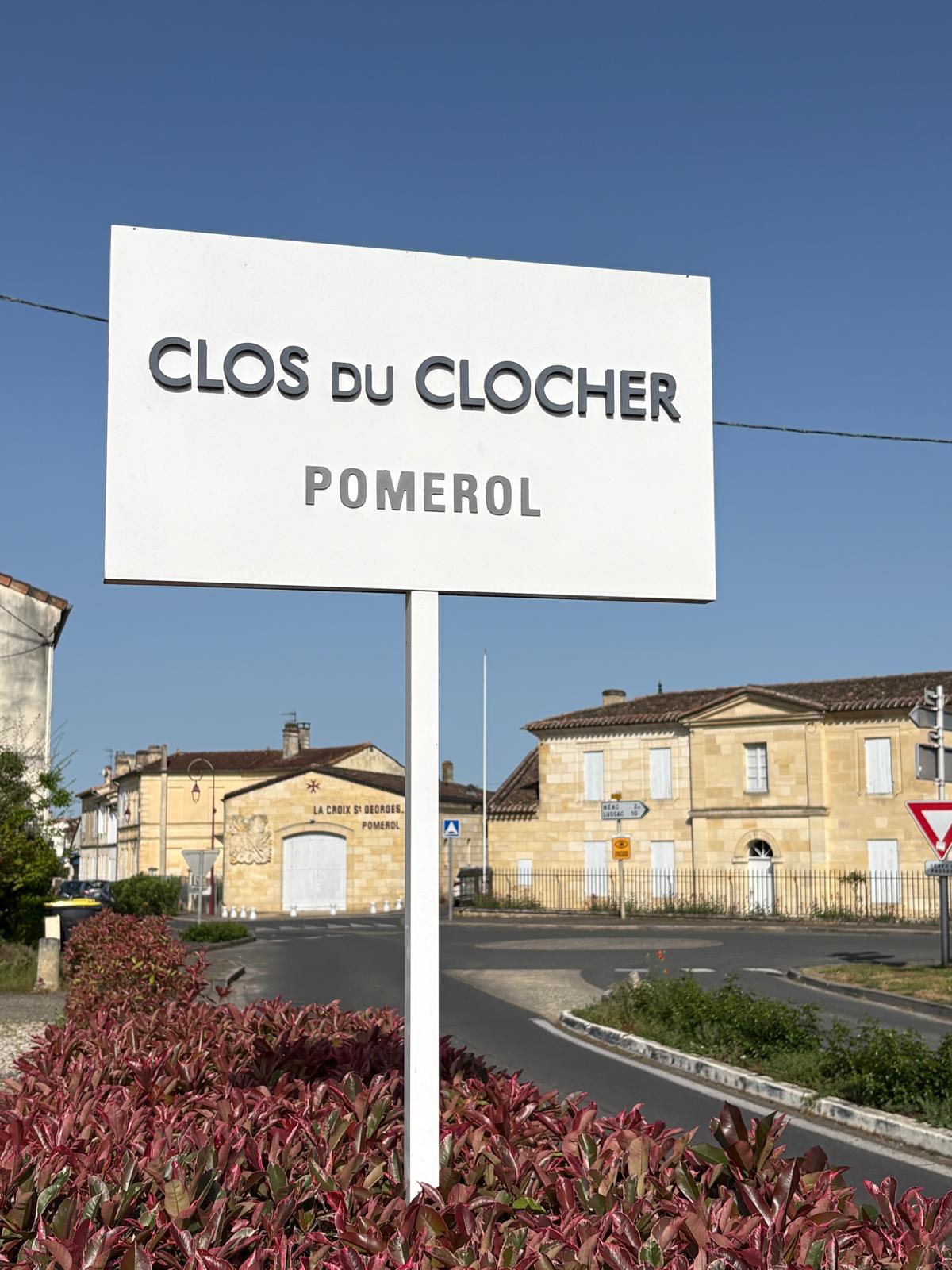
From Puy Razac we then drove back toward Libourne and our final tasting of the day at the offices of our lang-standing Negociant, Jean Baptiste Audy. Here we met with Michel Moulene, who explained more about the 2025 vintage, especially from a Right Bank view. The heat in 2025, he explained, was such that the older Merlot vines, with roots reaching deep into the water-retaining clay soils of the St Emilion and Pomerol plateau, suffered less stress and were therefore able to give slightly higher yields in 2025, as well as retaining that all important acidity. Michel saw Pomerol, especially, as a success in 2025. Tasting across the range of 20 or so wines he had selected we agreed; the Pomerols of Bonalgue, Clos de Clocher and Haut Conseillants, all exhibiting a rich yet elegant structure, with concentrated red and black fruits, supple tannins and a beguiling freshness. Highly polished and very moreish.
We finished tasting at 7.15pm, before a quick walk along the river to a local restaurant for dinner with Audy and guests, the mighty and sluggish Dordogne a lovely site as dusk came on. Michel proceeded to open some delicious wines - thank you Michel! We arrived back at Chateau Grand Corbin, our lodgings for the night, around 11pm with only 2 hours of emails to do upon return … deep joy.
Tuesday 21st
We started the second day at the UGC events at Chateau Beauregard in Pomerol, sharp at 9am. Here John and I re-tasted many of the wines we had already tasted on Monday at The Hangar. This is an important part of the En Primeur week. Tasting the wines 2, or even 3 times, is crucial, as often it is only with more time and a second taste, that a wine really reveals itself. Often, I look at my tasting notes and scores, and whilst most wines achieve identical remarks and scores on each taste, many may have a different flavour or texture revealed, and therefore scores can be marked up, or down, accordingly.
Overall, our combined view is that Pomerol is a success in 2025. The 20 or so wines tasted at the UGC were uniformly rich, dark and polished, with cherry and raspberry fruit in abundance. The ripeness clearly evident in the glass, with richer, more opulent flavours than the tighter and edgier 2024’s, and the freshness and lower alcohols gave the wines a lovely balance and elegance. My impression by now was that 2025 may drink a little younger, but also the feeling from the winemakers was that 2025 was special, and worthy of ageing in many cases. Rouget in particular, stood out.
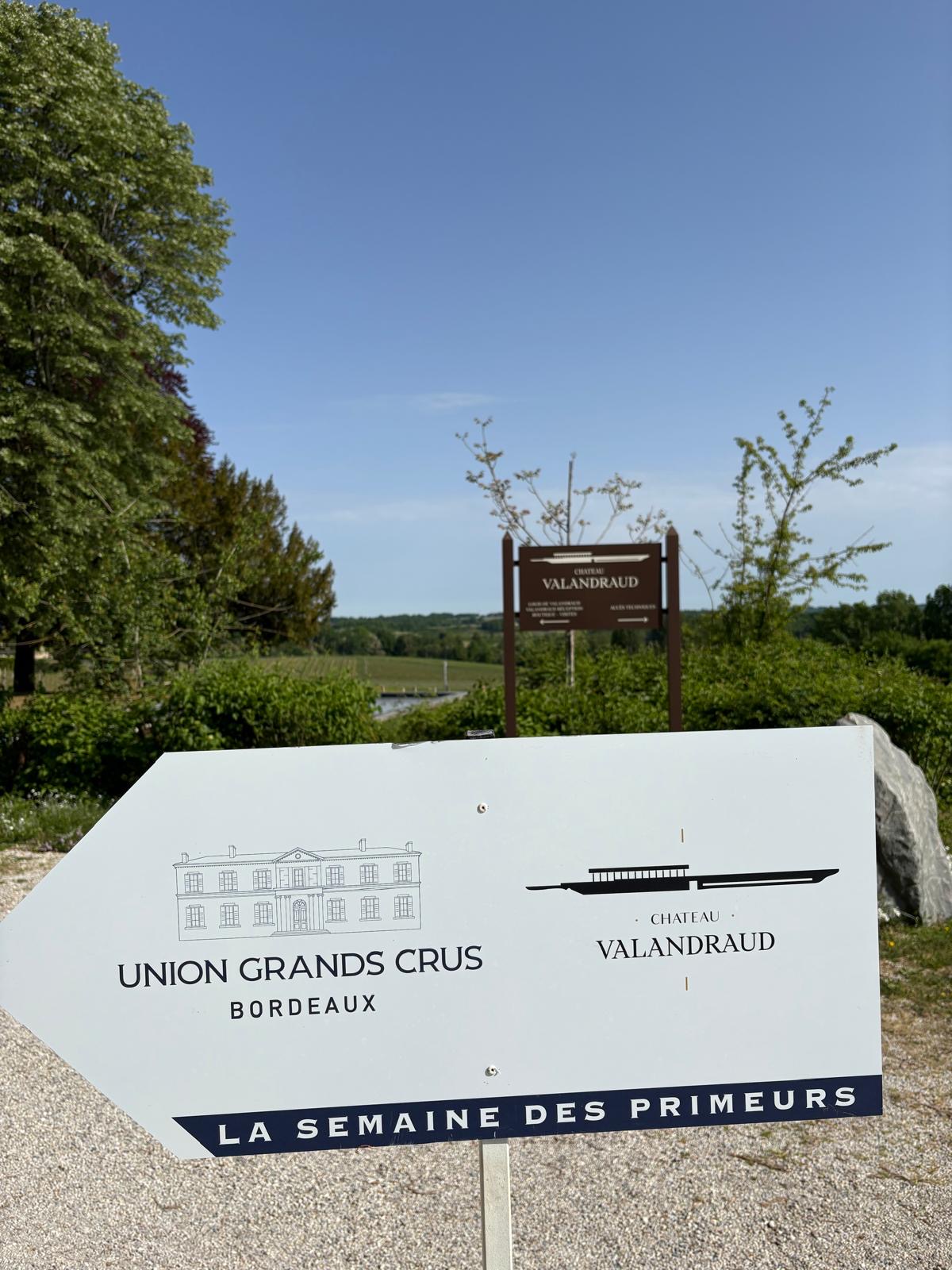
From Chateau Beuregard it was a short hop to Chateau Valandruad in St Emilion, an elegant small estate that lies away from the main town, and occupies a lovely position amidst rolling hills and deep glades of trees. Of the 22 wines shown at the St Emilion UGC, John and I both agreed that Right Bank estates have scored highly in 2025. The wines all showed very well, but perhaps a little more polish and concentration in Pomerol, and less uniformity in St Emilion. A few wines showed a rigidity of tannic structure but these were in the minority. Price will be important, however, as almost all the chateau were reporting yields of 18-30% reduction.
The Right Bank tastings now concluded, it was back once again into the car and a long drive across to Pessac, south of Bordeaux City. As we drove, the beauty of Bordeaux and the Right Bank was revealed – rolling hills, vineyards, pasture, winding rivers, forests, pretty honey-stone villages etc. If you have never visited the Bordeaux region, I strongly urge you to do so.
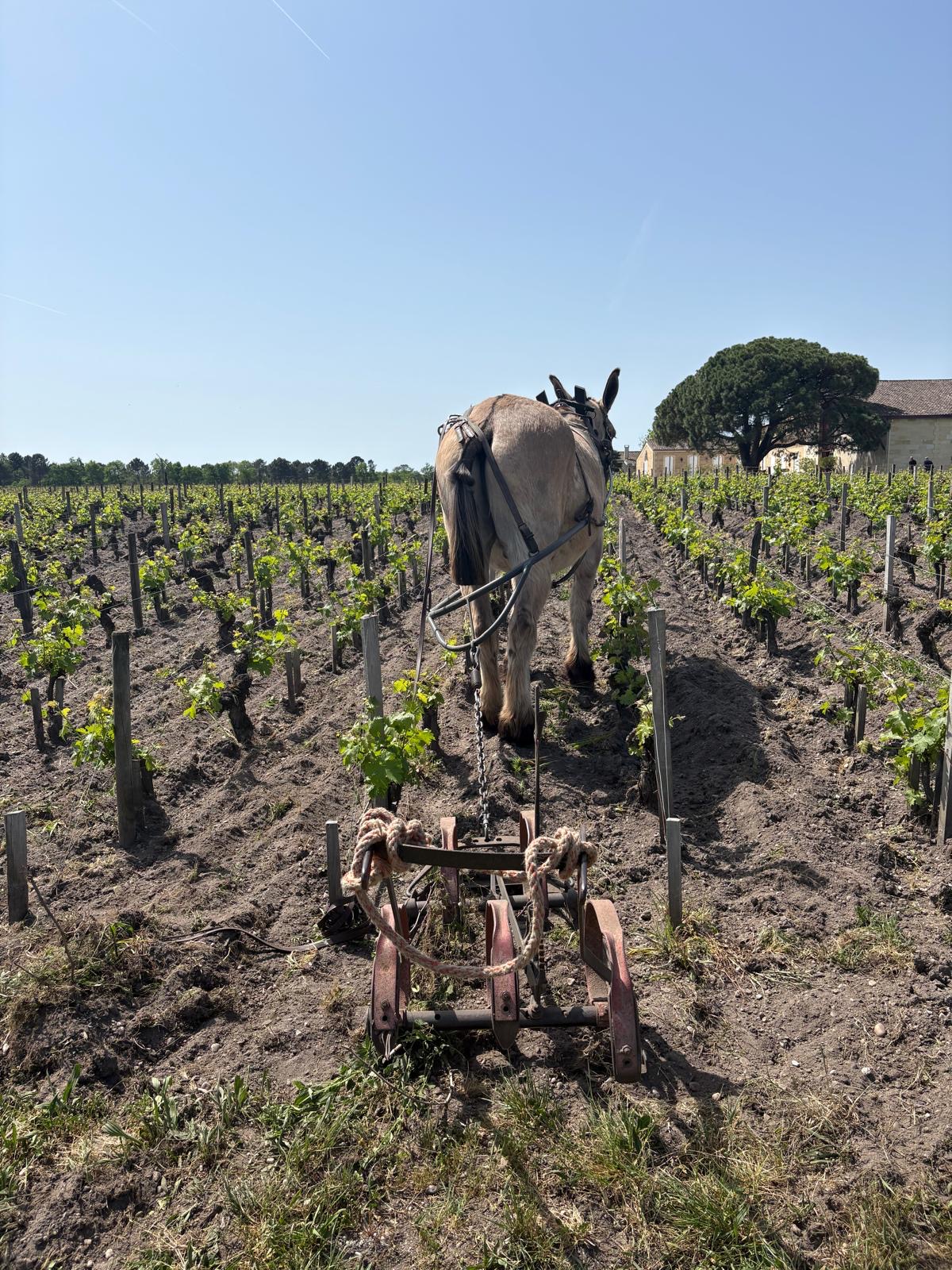
Arriving at Domaine de Chevalier in Pessac is always a pleasure. The reputation of this elegant Classed Growth chateau is built on both red and white wine and the Chateau itself looks amazing, honey stoned, with a rounded frontage to the new chais, and an elegant farmhouse-styled main house sitting amidst vineyards. As we arrived the vineyards were being ploughed by horse, contributing to a looser and healthier soil.
The tasting at Pessac UGC is a big one. First, you taste the whites from the 23 chateau, then go round again to taste the reds, before then moving to the glistening steel and glass winery itself to taste the Sauternes and Barsac sweet wines – all in all, around 60 wines to taste.
Post-tasting, when John and I compared notes, it was again quickly obvious that 2025 was a success in these appellations too. The Pessac reds were ripe, elegant and balanced, with good rich sweet red and black fruits, lower alcohols and supple yet supportive tannins. The whites were also delicious, with quenching acidity from Sauvignon Blanc and Semillon, light oak integration, roundness and lovely texture in the mouth. To cap it off the sweet wines, sometimes a disappointment in hot years such as 2025, were again a revelation – rich, concentrated and luscious, all marmalade, peach, barley-sugar and streaks of that all-important citric acidity – vital to cut through the high levels of sugar that the warm vintage produced.
3.30pm and from Pessac it was an hour’s drive to Chateau Cantemerle in the commune of Macau, just north of Bordeaux city, which was our home for the next 2 nights. Here we were met by the affable and knowledgeable Pierre-Alexandre Gazaille, GM of the Chateau, who showed us around the magnificent new Chais, cellars and estate – newly completed for the 2025 vintage ( the builders completed their 3 year renovations on the Monday of the harvest week, the first grapes arrived on the Friday! ). Cantemerle is one of the largest estates in Bordeaux, and arguably now the most beautiful and elegant.
With Pierre-Alexander we tasted the 2025 Cantemerle; again, looking at my notes, I can see that it scored very well in the Hangar tasting on Monday, but tasted for the second time at the Chateau itself, it seemed a tad richer, more elegant and showing more streaks of rich red cherry than before. The acidity was lifted, and the wine more rounded and classy. This is a seriously good Chateau, punching well above its 5th Growth status.
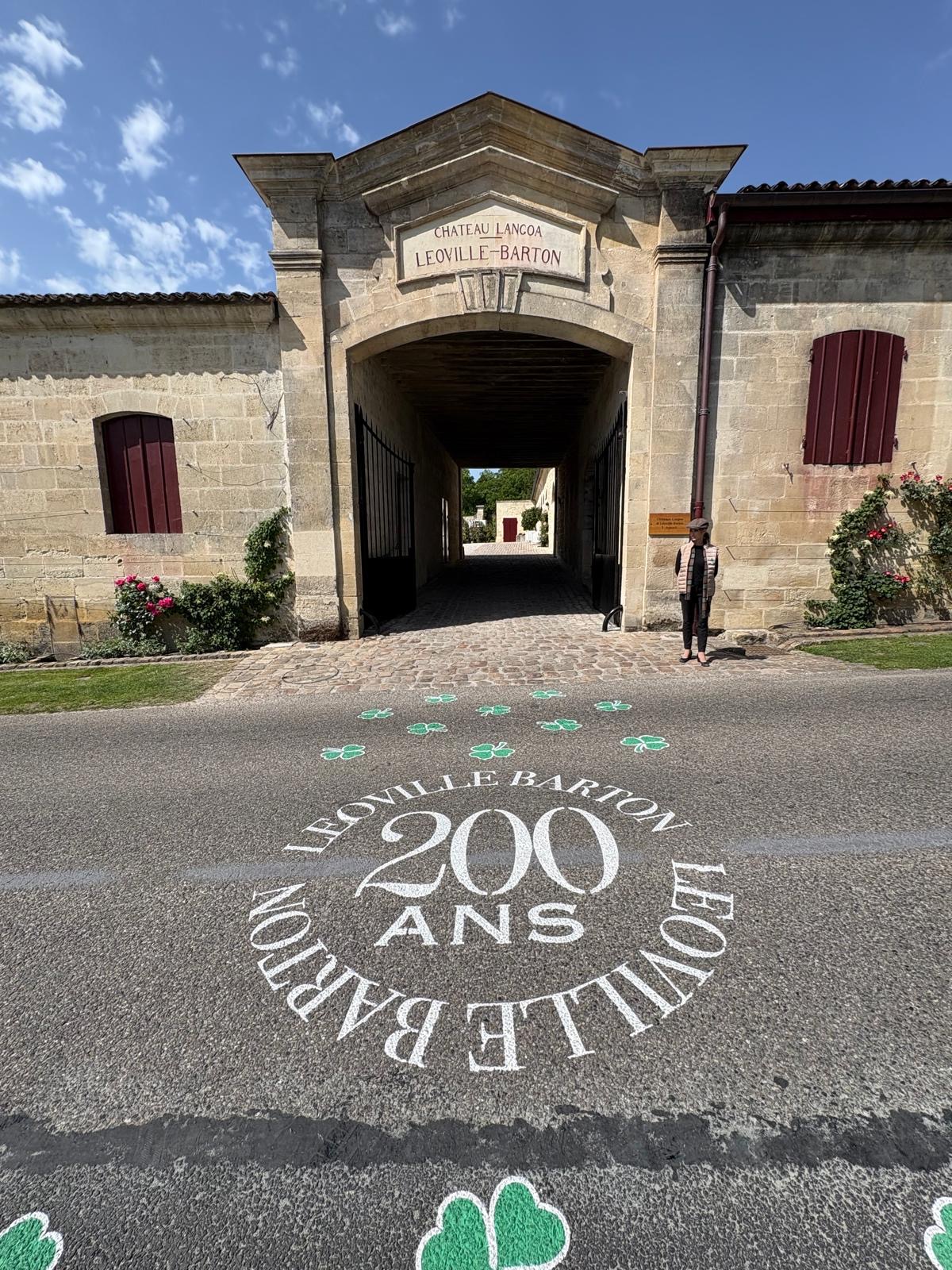
Tuesday night saw us at Chateau Leoville Barton, and partying with the Barton family as they celebrated the 200th year of Chateau Leoville Barton. All I will say is that the Barton’s originally came from Ireland – and we all know the Irish can put on a party!
Wednesday 22nd
Our last full day in the Medoc! After a leisurely breakfast it was but a simple stroll across the sun dappled courtyard at Cantemerle to the winery for the Margaux and Haut Medoc south UGC. Bliss!
This is one of the largest UGC tastings. Around 30 wines to taste from all corners of Margaux and Haut Medoc. Like Tuesday, we were able to taste a large number of the 2025 wines for a second time. Top scorers were again the wonderfully elegant and balanced Angludet, as well as Giscours, Kirwan and Cantenac Brown. The level of richly concentrated red and black fruits, polished tannins and fresh acidity was markedly better in these wines than some others in the tasting. I also liked Marquis de Terme. Some Chateau displayed rigid tannins and too much oak, which for the elegant wines of Margaux is out of place.
From Cantemerle, we drove through the vineyards to Leoville Barton, on the way stopping for photographs of the vineyards, Chateau and gentle rising gravels beds of St Julien.
In the UGC of 2024, both John and I thought St Julien was a success- the wines standing out for their richer fruit and better balance and structure. In 2025 it was a repeat – the 2025 St Julien reds again showing richness, sweet rounded and concentrated structure, a perfect combination of acidity, tannin, fruit and lovely mouthfeel. Standout wines were many but personally I thought Leoville Barton, Talbot, Gruaud Larose and Beychevelle were all fantastic. It is just a shame that there will not be a lot available, as the yields in almost all St Julien were reduced by around 25%. Of the lesser appellations such as Listrac and Moulis, I highlighted Poujeaux as a standout wine.
From Cantemerle we drove to Chateau Pontet-Canet, 5th growth in Pauillac, for a private tasting. Pontet-Canet 2025 was very special - rich and dark, opulent and seamless. The use of 35% amphora as well as 50% new oak adds a dimension and purity to the wine which shows really well in the glass, even at this early stage of the wine’s development. A wine to watch I wrote in my tasting book!
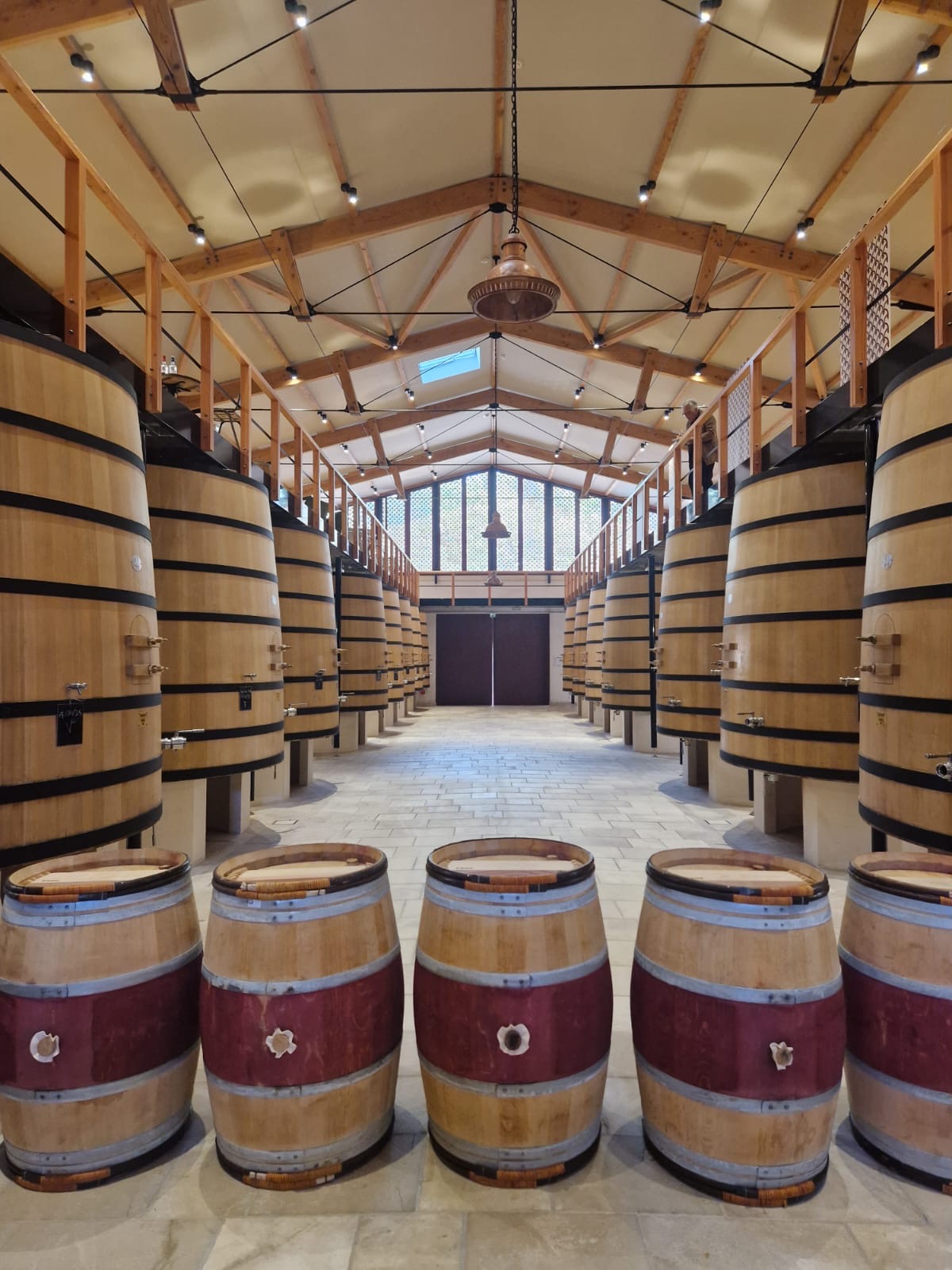
The last UGC of the day, and the final one of the week was at Chateau Lynch Bages in Pauillac where John and I tasted over 20 wines from Pauillac, St Estephe and surrounds. The vat room at Lynch is amazing to see, more akin to a film set, with gleaming polished steel tanks, spotless tiled floors, smoked glass, concrete and skeletal steel bracing. A wonderfully scenic setting for the wine tasting.
Of the wines on show, the richness and power of the Pauillacs showed well in almost every Chateau. The power of the vintage and the appellation evident in the glass; stand out wines were Lynch Bages, Pichon Comtesse and Grand Puy Lacoste – and for value for money Haut -Batailley and Chateau Batailley were memorable.
From Pauillac we then drove north to Chateau Cissac, situated between Vertheuil and Saint Sauveur inland from both St Estephe and Pauillac. Here, in the grass pastures, flat vineyards and meandering streams of the Haut Medoc, you find few grand Chateau, and none with smoked glass and film-set-like vat rooms. This is an area where winemaking is still classed as farming, and vines are sandwiched between fields of vegetables and coppices of trees, and the farmhouses are surrounded by tractors, barns of chickens and large woodpiles.
Chateau Cissac is a Cru Bourgeois Superieur, run by the family Vialard and it was current proprietor Marie Vialard that came to meet us at the door for our final appointment of the week. Along with Marie, we also were re-introduced to Laurent Saint-Pasteur, winemaking director and Patrick Buleon, Commercial Director. As ever, the discussion was of the trials and difficulties of the 2025 vintage such as heat, lack of rain, reduced yields and the rush to harvest the grapes without losing acidity.
Chateau Cissac 2025 was a wonderful finale for our Bordeaux 2025 En Primeur tastings – dark, rich and concentrated, with uplifted fresh acidity, notes of cedar, black currant, graphite and integrated oak. We were also given the opportunity to taste previous vintages with Marie, Laurent and Patrick – the classy 2021 just opening, the glorious 2020 a powerhouse destined for a long life, but for me the surprise was a delicious and brooding 2016.
And so, after 3 days of tasting, swirling, blackened teeth, sore gums, writers cramp and a very disheveled and dusty hire car, we concluded our UGC tastings that evening with a well-deserved bottle of Chateau Cantemerle 2005, and the chance to compare notes and review what, as always, is a frenetic and pressurized few days.
Our verdict?
The 2025 vintage is very good, in some cases very, very good. A calm and even flowering after a mild winter was followed by hot temperatures in June and July – but the heat of the summer was tempered by important periods of rain which crucially helped the vines overcome hydro stress. The grapes were small, with thicker skins and reduced juice so the winemakers knew that a small harvest was on the cards from August onwards. An early harvest of the white grapes beckoned as the acidity began to suffer at the end of August However, for the red grapes, similarly all small and with thick, well-coloured skins, a short period of timely rain extended the maturity into early September. Therefore, picking, when it started, moved quickly and uniformly with healthy small grapes brought in showing high levels of colour, and medium levels of sugar and tannins, but reduced in juice yield. A light-touch approach to the winemaking meant no rigid over-extraction and punishing tannins.
Overall the wines are concentrated, with lovely fruit, acidity and supple tannins, lower alcohols and a delicious drinkability. Even though the vintage is the smallest in living memory we were surprised and delighted to see so many wines exhibiting complexity, fruit, structure, freshness, and, above all, balance.
Small but Perfectly Formed. Bordeaux 2025
 Back to blog